- Seeing is Selling
- Posts
- From Brief to Belief: How to Get the Best Results from Your Visualisation Partner
From Brief to Belief: How to Get the Best Results from Your Visualisation Partner
8 Practical tips for commissioning with clarity and confidence.

Richard Birket
October 31, 2025
Every successful visualisation project starts long before the first pixel is rendered.
It begins with understanding - of purpose, audience, and process.
After 26 years of working alongside developers, architects, and marketing teams, we’ve seen the difference a clear brief and collaborative approach can make. Whether you’re commissioning visuals for planning, marketing, or investor engagement, these principles will help you get the most from your team (and your budget).
1. Commission Early
Tight deadlines can be met when necessary - but the more time you allow, the better the outcome.
Early commissioning gives space for refinement, feedback rounds, and handling inevitable design evolutions. It also helps avoid rushed decisions that can limit creative opportunity.
The sooner your visualisation partner is involved, the more value they can bring - strategically and visually.
2. Time Your Photography Right
Photography is often the unsung hero of great CGIs.
Whenever possible, capture your photography before the darker, dingier days of winter. Good lighting, vibrant foliage, and crisp skies can completely transform the realism and tone of your imagery.
Of course, when timescales force later shoots, we can enhance the images to make them pop - and if a shoot isn’t even viable, we can sometimes rebuild scenes using Google Earth backplates. But natural conditions will always give you the strongest foundation.
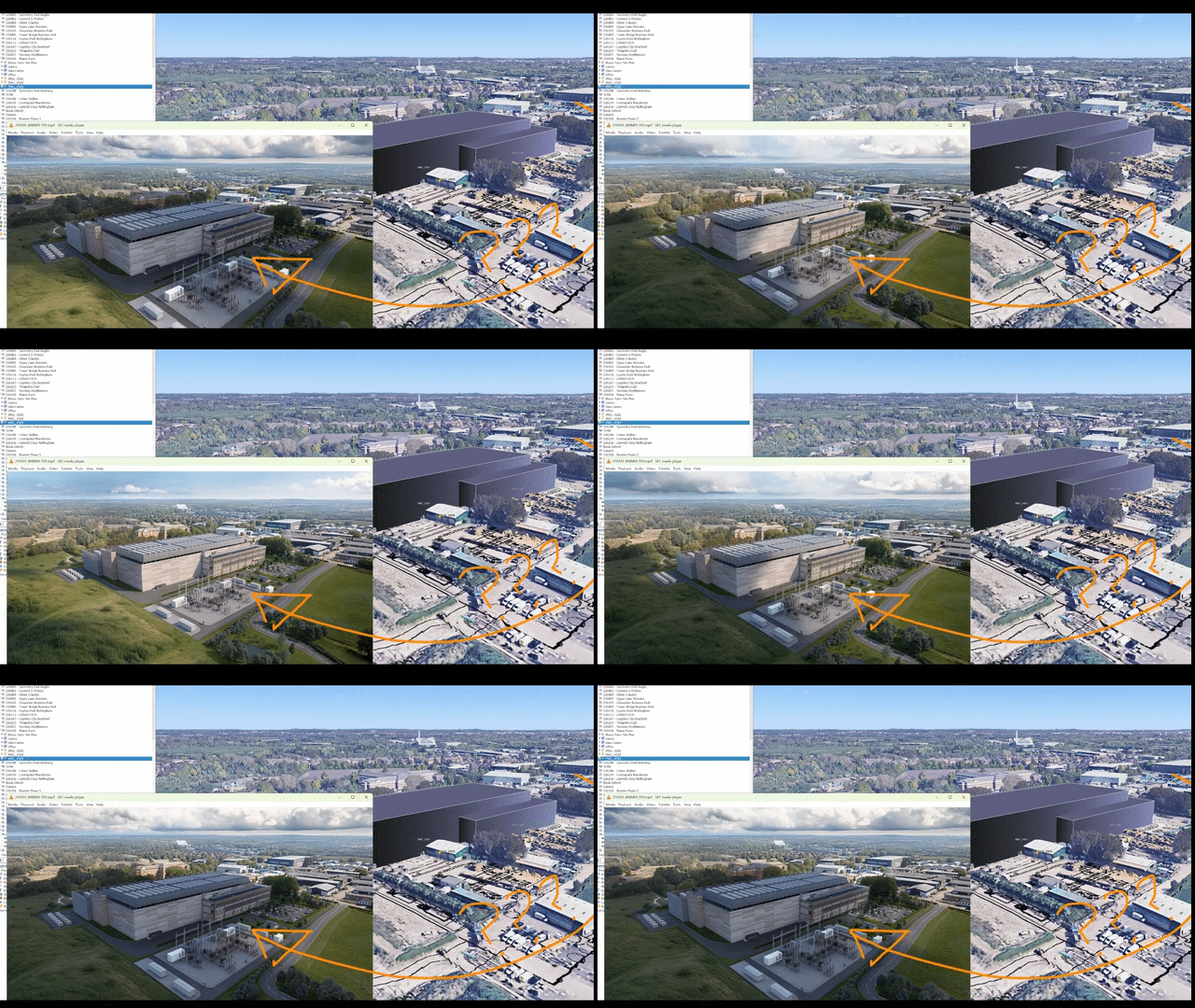
Turning the impossible into the achievable - for a film, we recreated a Heathrow flightpath drone view using enhanced Google Earth imagery, subtle animation, and moving cloud shadows to bring the scene to life, without a drone having to leave the ground | © Blink Image Limited
3. Define a Clear Scope
Before commissioning, consider what you actually need the visuals to achieve.
We’re always happy to consult on this, but a clear scope from the outset keeps projects efficient and aligned.
Think: what’s the purpose? Planning submission, consultation, investor pitch, marketing campaign?
Each requires a different approach, type of visual asset, level of detail, and tone.
4. Tell Us Your Objectives
Every visual has a job to do.
Who is it for? And what’s the one thing it absolutely needs to communicate - the three-second test?
In other words, if someone unfamiliar with your project glanced at the visual for just three seconds, would they instantly understand its purpose? Whether it’s to reassure planners, inspire investors, or attract occupiers, the core message should be unmistakable at a glance.
That conversation at the start can save hours later. It ensures the visual cuts through noise and moves your audience from confusion to clarity.

Softer artistic illustrations for an industrial development at public consultation | © Blink Image Limited
We love a good reference. Whether it’s a previous project, a favourite visual, or even a photo that captures the mood or materiality you’re after - it helps us understand your intent faster.
References aren’t about copying; they’re about alignment.
6. Prioritise Feedback
Feedback is essential, but fragmented feedback can slow things down.
Consolidated, coordinated comments from your team keep the project flowing smoothly - avoiding duplication and leaving more time to refine, polish, and make everything look its best.
7. Be Clear on Usage
Tell us where your visuals will appear - website, brochure, hoarding, video, or social.
The same image can look very different on a billboard compared to a LinkedIn post.
Knowing the end format early helps us optimise composition, aspect ratio, and resolution from the start.
8. Think Beyond the Static Image
The most effective visual strategies don’t stop at stills.
Films, animations, interactive experiences, and 360 tours allow you to tell your story dynamically - engaging completely different audiences and differentiating you from competitors still relying on traditional tools.
When choosing a visualisation partner, make sure they can help you explore these wider creative options, not just deliver single images.

Living Image created from a drone overview static CGI - Increasing engagement and showing the scale and connectivity of the scheme | © Blink Image Limited
Final Thoughts
A good brief gives direction.
A great brief builds belief - in the story you’re telling, the outcomes you’re seeking, and the visuals that get you there.
If you’ve got a project coming up and want to make sure it’s set up for success, we’re always happy to help shape the right visual strategy from the start.
✉️ [email protected]
📞 07777 146495