- Seeing is Selling
- Posts
- In Industrial Property, Prime Is Pulling Away. Here’s Why Your Visuals Need to Keep Up.
In Industrial Property, Prime Is Pulling Away. Here’s Why Your Visuals Need to Keep Up.
The gap between prime and secondary is widening - and your imagery is often the first place prospective tenants judge which side you’re on.

Richard Birket
March 13, 2026 • Estimated Reading Time: 3 minutes
Not all sheds are created equal in the current market - and the industrial sector is making that clearer than ever.
Recent outlooks from agents including Knight Frank and Savills point to the same underlying trend: rental growth is concentrating in prime assets, while secondary stock faces a more challenging environment. Research across the sector also shows the gap between prime and secondary rents widening significantly over the past decade.
For developers bringing forward industrial space today, that raises an important question.
Before a prospective occupier ever visits the site - before a letting agent walks them through the specification - how do they know your scheme is prime?
More often than not, the answer is simple: your imagery.
And that’s where many otherwise strong industrial schemes let themselves down.
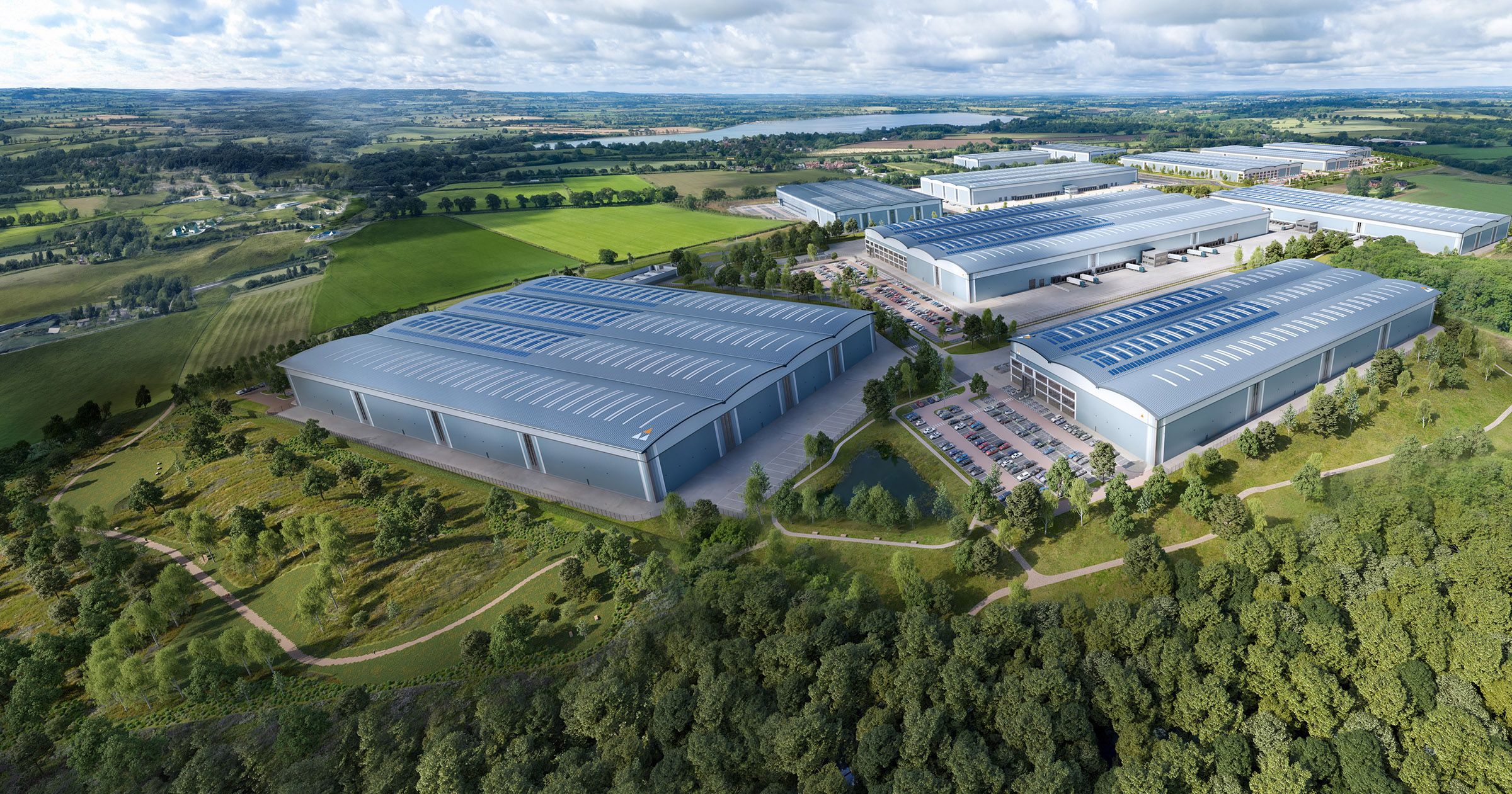
Symmetry Park Rugby, Tritax © Blink Image Limited
What ‘Prime’ Actually Means to an Occupier in 2026
A decade ago, “prime” industrial was largely shorthand for location and size.
That definition has shifted.
Today’s occupiers - particularly logistics operators, manufacturers and large distributors - evaluate a much broader set of factors alongside location. Clear height, power availability, yard configuration, sustainability credentials and operational efficiency are all part of the decision.
EPC ratings, BREEAM certification, solar capacity, EV infrastructure and site circulation are now standard considerations in many institutional occupier requirements.
The implication for marketing is straightforward.
A scheme can be genuinely Grade A in specification, yet still read as secondary if the visuals fail to communicate those qualities.
An exterior CGI that shows a generic grey box under flat lighting, with little indication of the building’s operational layout or environmental performance, leaves the occupier to fill in the blanks - and they will usually do so conservatively.

Beddington Lane, Prologis © Blink Image Limited
The Visual Signals That Communicate Grade A
The visual language of a prime industrial scheme is quite specific, and it differs from the approach that works for offices or residential development.
Occupiers and their agents want to understand how the building works.
They want to see clear height and internal volume.
They want to understand yard depth, turning circles and dock configuration.
They want visibility of environmental features - solar arrays, planting strategies, EV charging, or water management.
None of this is decorative. It is commercial information, communicated visually.
The most effective industrial CGIs treat these operational details with the same care and prominence that residential marketing gives to kitchens or terraces. In logistics development, the “hero image” might just as easily be an aerial showing yard depth and solar coverage, or an internal view illustrating racking beneath the building’s clear height.
These are the details that occupiers and their agents are actually evaluating.
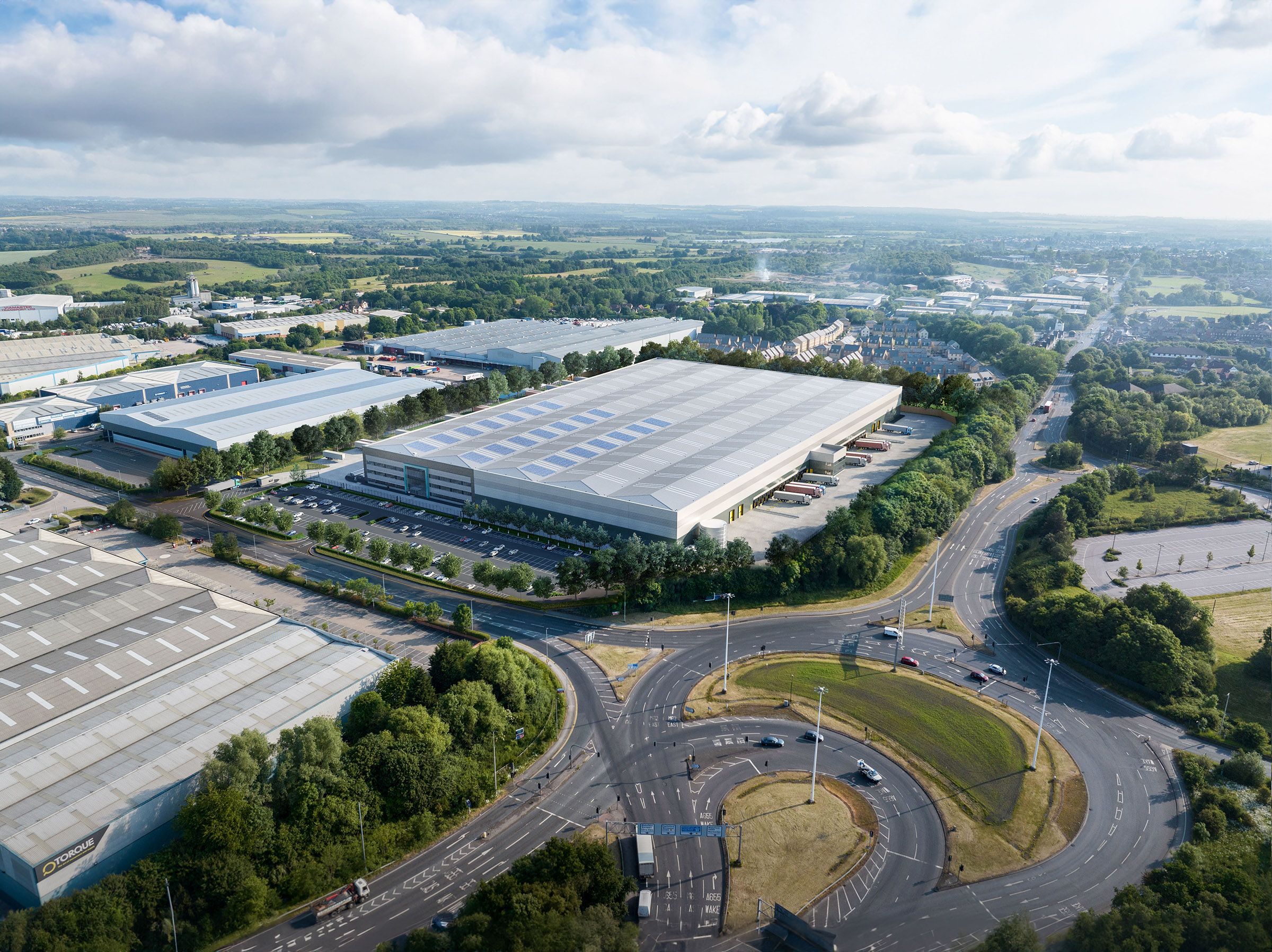
Switch, Wakefield © Blink Image Limited
Showing Sustainability Without Making It a Brochure
ESG credentials are now firmly embedded in occupier requirements, particularly among institutional tenants.
But the way those credentials are communicated visually matters.
A CGI covered with certification logos or graphic callouts can feel like marketing. What tends to work better is simply showing the features themselves as they will appear in the finished scheme.
Solar arrays visible on the roof in an aerial view.
Landscaping and SuDS integrated into the site layout.
EV charging bays located where they will actually be used.
The most convincing approach is factual rather than promotional. Occupiers are sophisticated enough to recognise when sustainability features are genuinely embedded in a scheme’s design, and planning officers will expect those features to be visible in the proposals.
The Risk of Looking Secondary When You’re Not
Here is the quiet risk.
A developer invests in a genuinely strong specification - generous clear heights, strong ESG credentials, well-designed yard layouts and good connectivity. But the scheme is marketed using imagery that could belong to almost any mid-range unit on any industrial estate.
The building may still perform well in the market, but the marketing material fails to signal the quality of the asset clearly to prospective occupiers.
First impressions matter. For many tenants and agents, the visuals are the first encounter with the scheme, often long before a site visit or detailed specification review.
In a market where prime and secondary assets are diverging, ensuring that your marketing imagery accurately communicates the quality of the development has become increasingly important.

Symmetry Park Ardley, Tritax © Blink Image Limited
If you are developing or marketing an industrial scheme and want the imagery to reflect the true quality of the asset, it is worth thinking about that visual strategy early.
We have been producing industrial and logistics visualisations for over 25 years and work regularly with developers, agents and design teams across the sector.
If you would like to discuss an upcoming project, we would be glad to help.
[email protected]
07777 146 495