- Seeing is Selling
- Posts
- One Box. Three Potential Occupiers. Three Different Stories.
One Box. Three Potential Occupiers. Three Different Stories.
Why showing the same space in multiple operational modes is becoming standard practice in industrial marketing.

Richard Birket
April 10, 2026
Most industrial buildings are more flexible than their marketing suggests.
The space itself might credibly suit a third-party logistics operator, a precision manufacturer, and a life sciences occupier. But if the visuals only ever show one interpretation - or worse, an empty shell - two of those conversations never really get started.
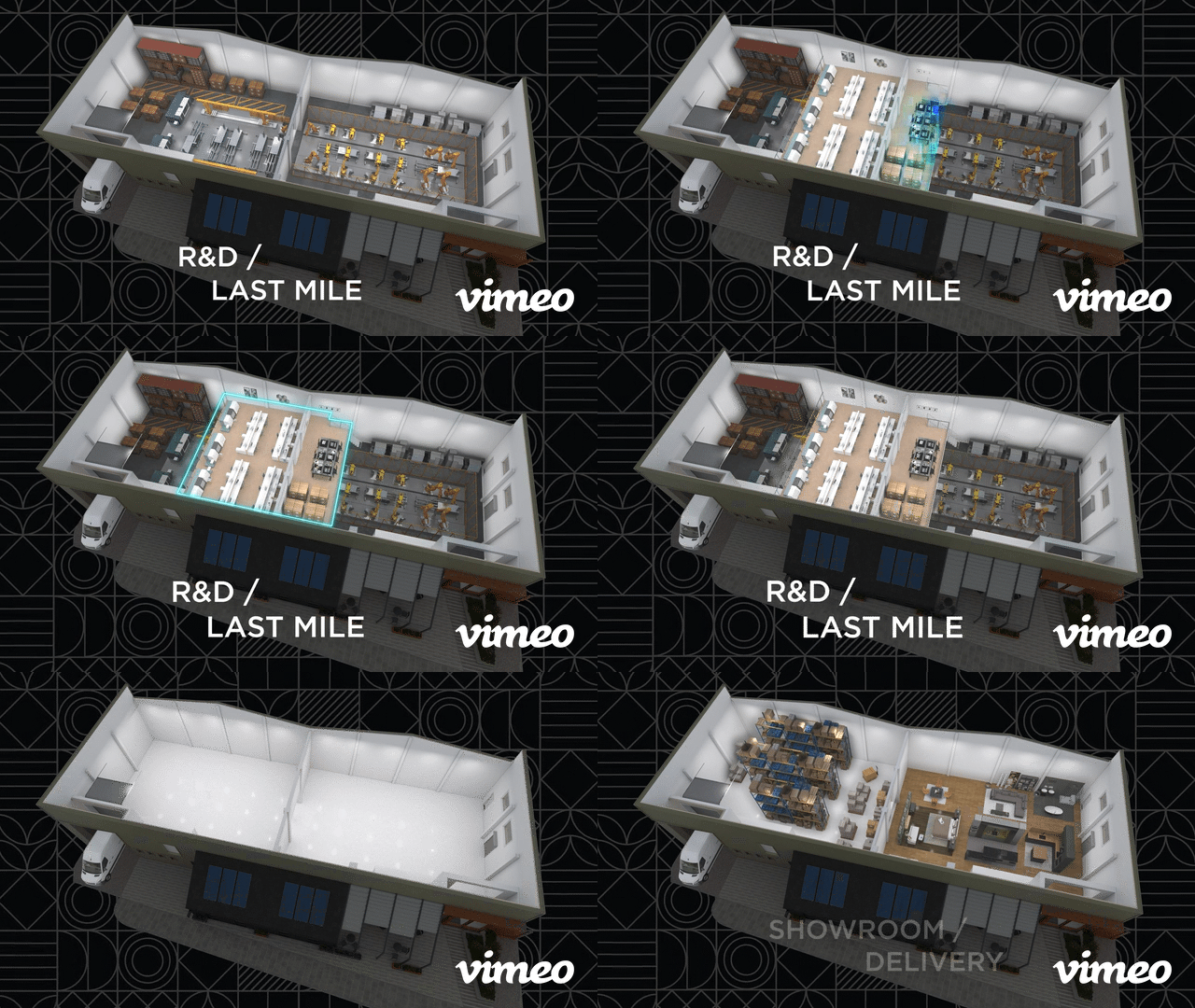
Helping different tenant types picture the possibilities in a sought-after location, Project: Ferrier Street, Wandsworth - Columbia Threadneedle © Blink Image Limited
The Gap Between Flexibility and Perception
Developers talk about flexibility constantly. Agents sell it. Specs list it.
But occupiers experience it visually - or they don't experience it at all.
Each tenant type arrives with a specific set of operational questions they need answered before they'll commit time to a viewing, let alone a conversation:
A logistics operator needs to see that racking, vehicle flow, and yard circulation actually work at the volumes they run. A manufacturer wants to understand how the building supports process - power capacity, adaptability, servicing, workflow logic. A life sciences business is looking for credibility from the moment someone arrives: controlled environments, clean zones, a front-of-house that reflects the quality of what happens inside.
These aren't abstract concerns. They're the filters through which every space gets evaluated. Generic shell visuals rarely answer them.

Helping advanced manufacturers imagine the possibilities, Project: Nova Oxford - IM Properties © Blink Image Limited
What Targeted Fit-Out Visuals Actually Do
Taking the same base building and visualising it across two or three distinct operational scenarios isn't a cosmetic exercise - it's a strategic one.
Done well, it does several things at once:
It gives each tenant segment a visual they can actually use. Not a space they have to imagine themselves into, but one where their operation is already running - or close enough that the leap feels small.
It gives agents clearer narratives to work with. Instead of explaining adaptability verbally, they can show it. That changes the quality of early conversations considerably.
And it reduces the friction that slows decisions down. When a prospect has already mentally placed their business inside a building, the conversation shifts. The question moves from could this work? to how quickly could we make this work?
The Practical Case for Multiple Scenarios
This approach tends to pay for itself quickly - not because it makes marketing look more polished, but because it keeps more conversations alive for longer.
Enquiries arrive better qualified. Viewings happen with more context. And the agents working the scheme have something concrete to send across when an occupier goes quiet - rather than chasing for a decision with nothing new to offer.
The alternative is narrowing your audience by default. If your visuals only tell one story, that's the only story most occupiers will hear.
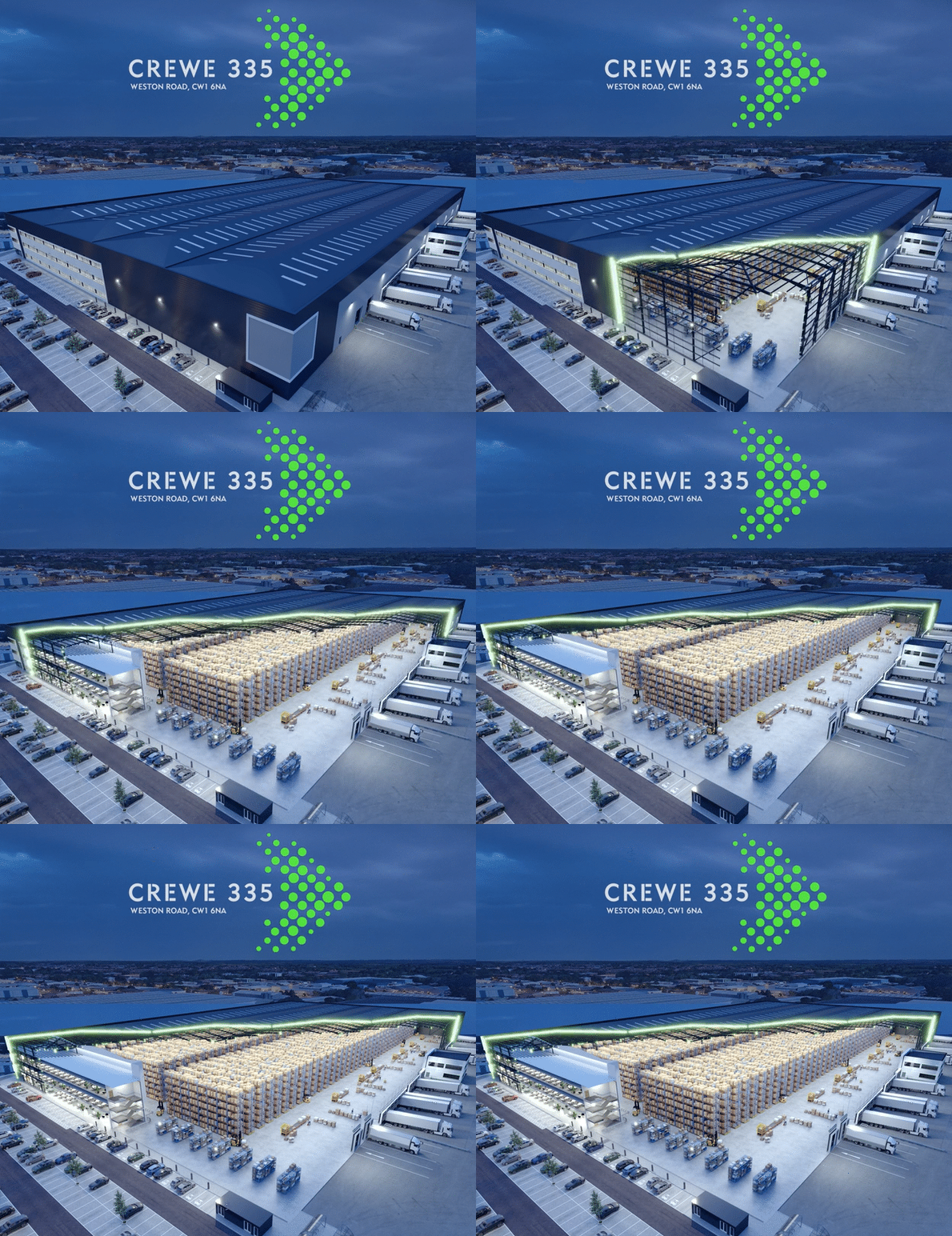
Peel Back Animation for Hillwood UK’s Crewe 335 to Reveal Interior Racking and Layout © Blink Image Limited
The Question Worth Asking
The best visual strategies don't just document what a building is. They make visible what it can become - for different occupiers, with different needs.
If you're taking a scheme to market that has genuine multi-sector appeal, it's worth asking honestly: are the visuals communicating that appeal, or are you relying on occupiers to do the imaginative work themselves?
Most of the time, the building is better than its marketing. Fit-out visuals are one of the more effective ways to close that gap.
Happy to talk through how this could work for a specific scheme - no obligation, just a conversation.
✉️ [email protected] 📞 07777 146 495