- Seeing is Selling
- Posts
- One Brief. Multiple Assets. How to Think About the Long Game.
One Brief. Multiple Assets. How to Think About the Long Game.
Why the right brief can turn one model into years of useful assets

Richard Birket
April 17, 2026 • Estimated Reading Time: 2 minutes
When most developers commission visualisation, the first question is usually cost.
The more useful question is different:
how long will this be useful for - and how many places will we use it?
The lifespan and role of different visual assets vary significantly. Understanding that - before you brief - can fundamentally change how you allocate budget and what you get back from it.
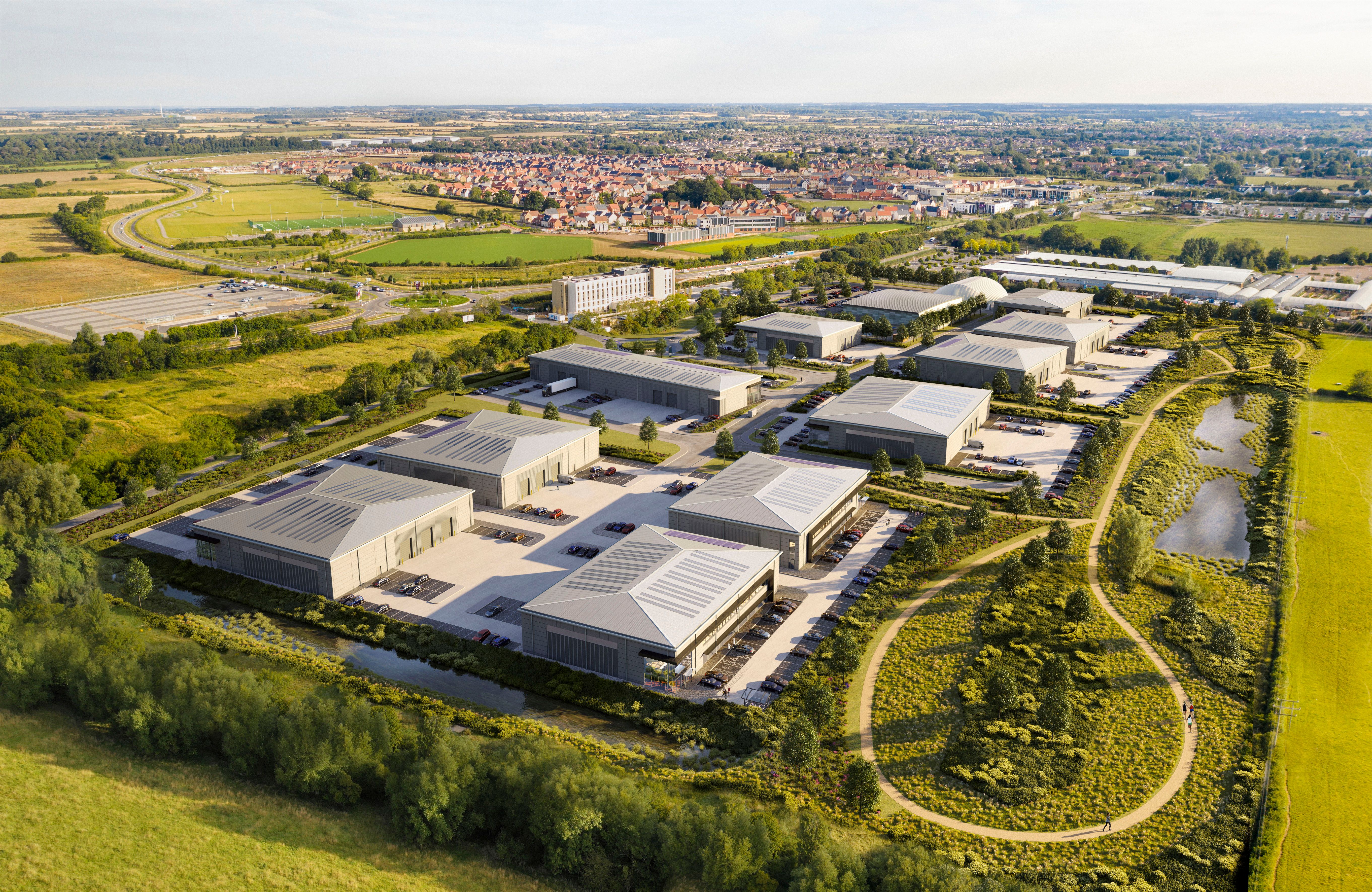
Drone Overview CGI for Albion Land’s Catalyst Bicester | © Blink Image
The CGI: Long-Term Value, Multiple Uses
A high-quality CGI is one of the most versatile assets you can commission.
It can be produced before planning is submitted, used in presentations, printed on hoardings, shared with agents, and included in investor material - often all at once. Unlike photography, it doesn’t date when the site is still a mud bath. It can show mature landscaping, active use, and a resolved building long before reality catches up.
We regularly see projects where a single CGI ends up being used across planning, marketing and investor presentations - sometimes for years.
In some cases, it remains the preferred way to represent a completed scheme even after handover, simply because the real building hasn’t yet reached that level of finish.
That’s why quality matters. The better the CGI, the more places it earns its keep.
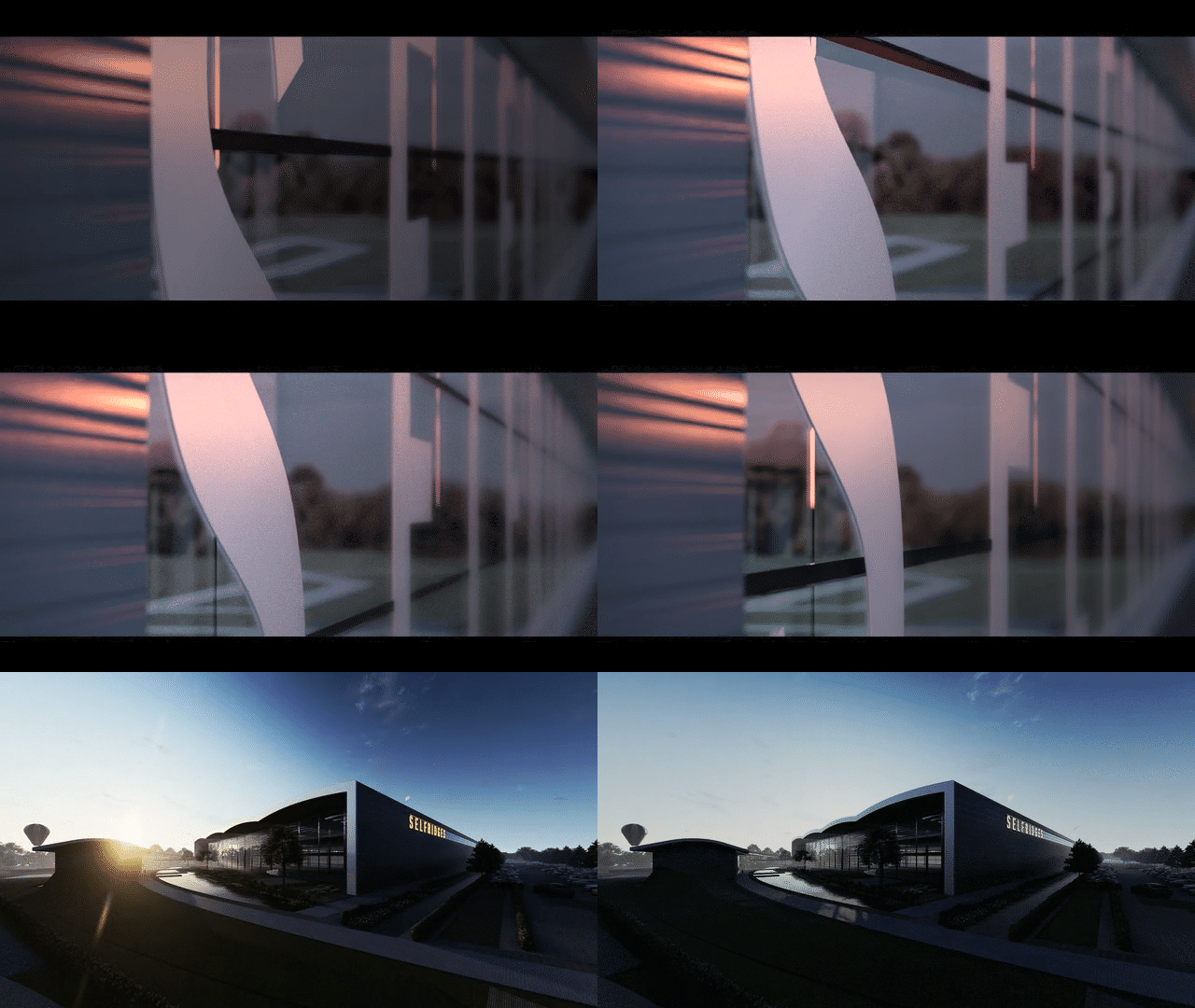
Cinematic clip from an industrial scheme teaser film | © Blink Image
A short teaser film - typically 30–60 seconds - can often be produced much earlier in the design process than a full architectural film.
It doesn’t require fully resolved design information. It works through suggestion and atmosphere - the idea of what’s coming - and it can generate genuine momentum at a point when there’s often very little else to show.
The assumption is that it has a short lifespan. In practice, it’s more flexible than that.
Sequences can be updated. Messaging can evolve. New shots can be introduced as the scheme develops. A teaser can move with the project without needing to be replaced entirely.
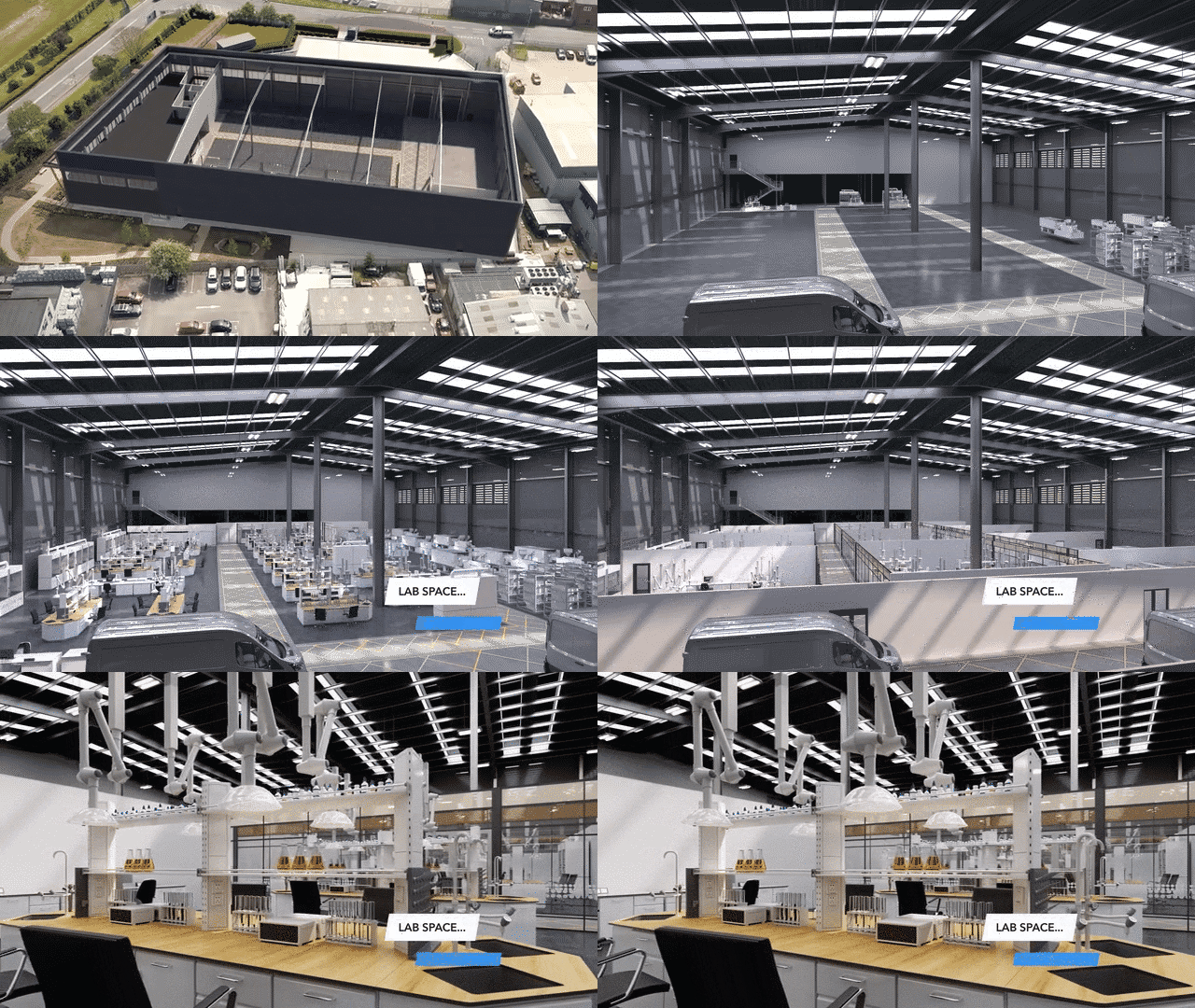
Clip from a full industrial development film showcasing the adaptability and potential use cases for occupiers, Project: Nova Oxford - IM Properties © Blink Image Limited
The Full Film: A Modular, Long-Term Asset
A full architectural film is a more significant commitment - in budget, time and coordination.
Storyboarding alone involves multiple stakeholders and careful decisions about what to include and how to structure it. But that upfront effort pays off over time.
A well-constructed film is modular by design.
Different edits can be created for different audiences - one focused on location and connectivity, another on the building, another on local amenity. New scenes can be added as phases complete or as new elements come into focus.
The film grows with the project rather than being replaced by it.
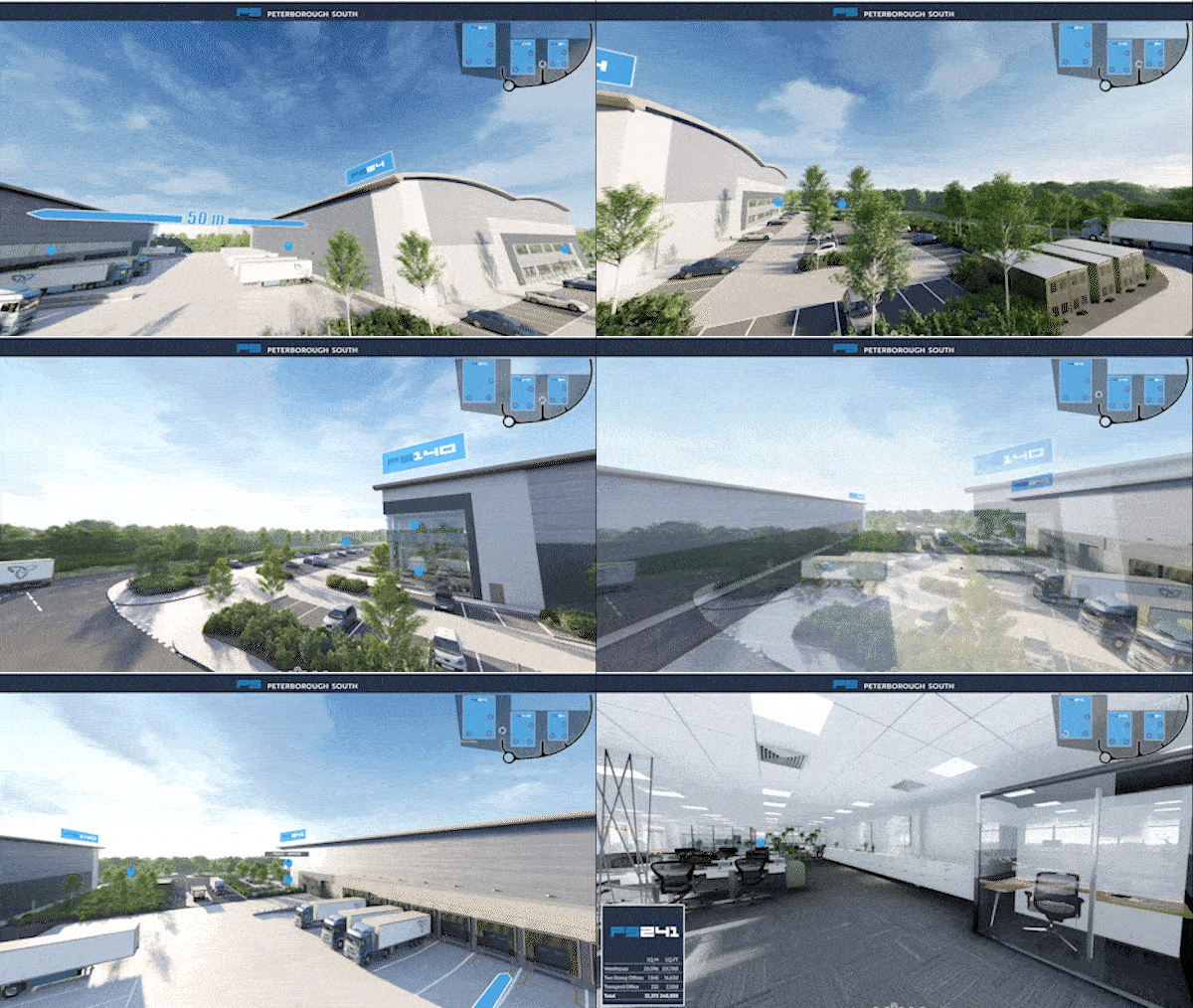
Exploring spaces long before they are built - CGI 360° tour for Peterborough South - Firethorn | © Blink Image Limited
The 360 Tour: Underused Pre-Construction Tool
Most people associate 360 tours with completed buildings - a photographer capturing what already exists.
What’s less widely understood is that the same experience can be created entirely from the 3D model, long before construction begins.
Pre-construction 360 tours can include interactive overlays, annotations and messaging that post-completion photography can’t easily replicate. They allow users to explore a scheme at their own pace, with the ability to highlight exactly what matters.
As the project evolves, those environments can evolve with it.
It’s one of the most underused tools in development marketing.
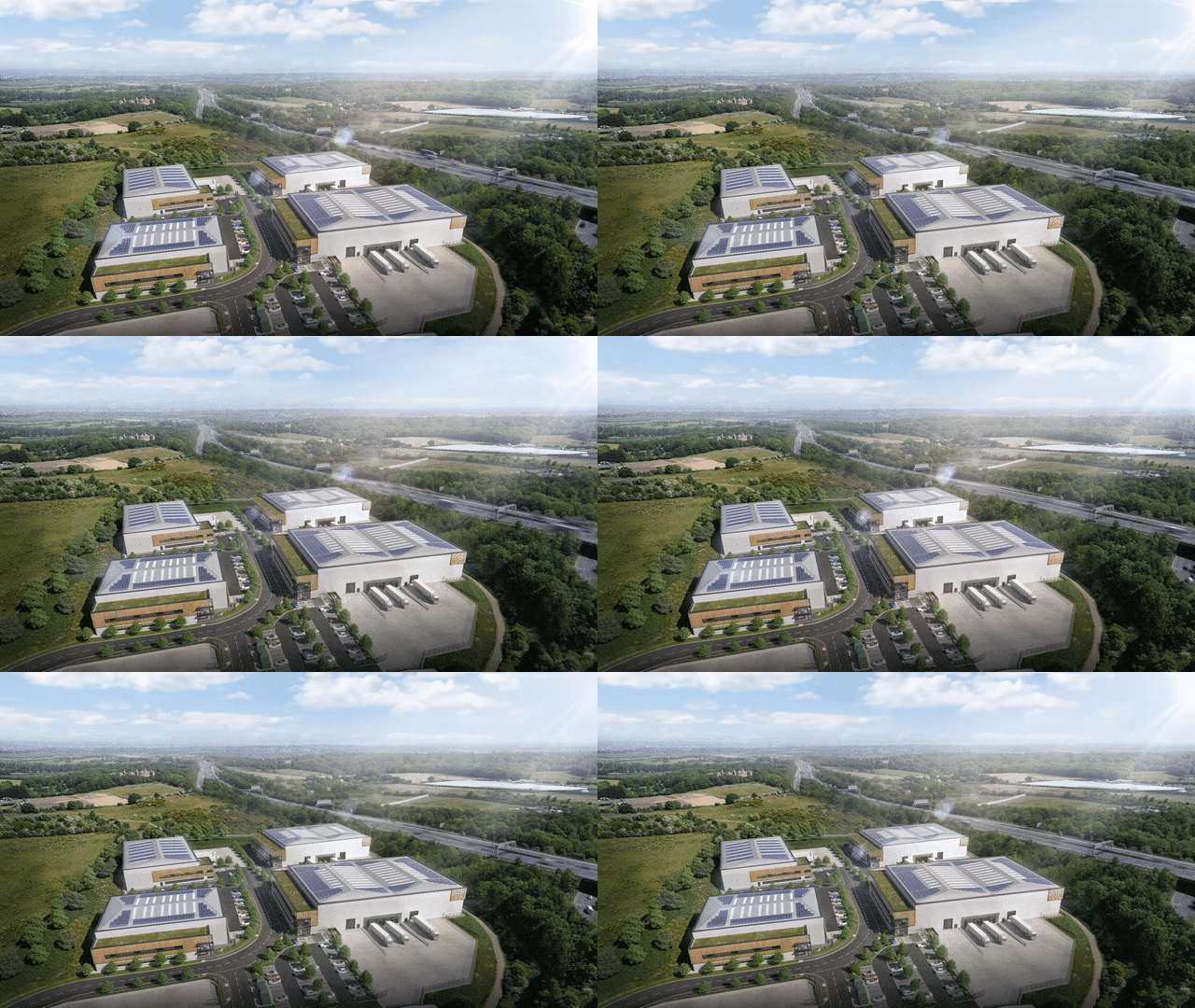
CGI Living Image created for Goya Development’s Swanley Distribution Park | © Blink Image Limited
Beyond These Four
These four sit within a broader toolkit - including interactive models, living images, image enhancement - but the principle is the same.
The right combination depends entirely on the project and what each asset needs to do.
The Underlying Point
Every CGI, film, teaser and 360 tour starts from the same place: the 3D model.
Once that model exists - built to the right standard from the outset - it can generate multiple assets across the life of a project, each with a different role and a different lifespan.
The developers who get the most from their visualisation budget ask a different question at the start.
Not just “what do we need now?”
But: “what will we need this to do over the next three years?”
That’s a conversation worth having before the brief is written.
✉️ [email protected]
📞 07777 146 495