- Seeing is Selling
- Posts
- One Building. A Wider Occupier Pool.
One Building. A Wider Occupier Pool.
How targeted visuals help reduce void risk by speaking to multiple tenant types.

Richard Birket
January 23, 2026
Most industrial schemes are designed with flexibility in mind.
The challenge is that flexibility often lives in drawings, specifications, and conversations - not in the visuals doing the heavy lifting during marketing.
From the outside, a single unit can struggle to portray the story of adaptability.
But in reality, that same space might suit a logistics operator, a manufacturer, or a life sciences occupier - each with very different priorities, pressures, and ways of working.
If your visuals only show one version of that story, you may be quietly narrowing your audience.

Helping manufacturers imagine the possibilities, Project: Nova Oxford - IM Properties © Blink Image Limited
Flexibility Only Works If People Can See It
Occupiers don’t buy space in the abstract.
They’re trying to picture their operation running smoothly inside it.
A logistics tenant is scanning for racking capacity, vehicle flow, yard depth, and clear circulation.
A manufacturer is thinking about power supply, machinery zones, workflow, and adaptability.
A life sciences business is imagining controlled environments, clean zones, specialist storage, and a credible front-of-house.
All three might be perfect fits for the same building - but they won’t assume that unless your visuals help them do so.
Generic hero shots rarely answer those questions on their own.
Helping different tenant types picture the possibilities in a sought-after location, Project: Ferrier Street, Wandsworth - Columbia Threadneedle © Blink Image Limited
Fit-Out Visuals Change the Conversation
This is where targeted fit-out CGIs and animated film come into their own.
By taking the same base shell and visualising it in different operational modes, you can tell multiple credible stories from one scheme:
• A logistics-focused visual that demonstrates scale, efficiency, and flow - reinforcing confidence that high-volume operations can run smoothly
• A manufacturing-led scenario that shows adaptability, servicing potential, and how the space supports process-driven activity
• A life sciences interpretation that communicates control, credibility, and a higher-quality working environment from first arrival onwards
Nothing about the building changes - only the way its potential is revealed.
Suddenly, the conversation shifts from “Could this work for us?” to “I can see exactly how this would work.”
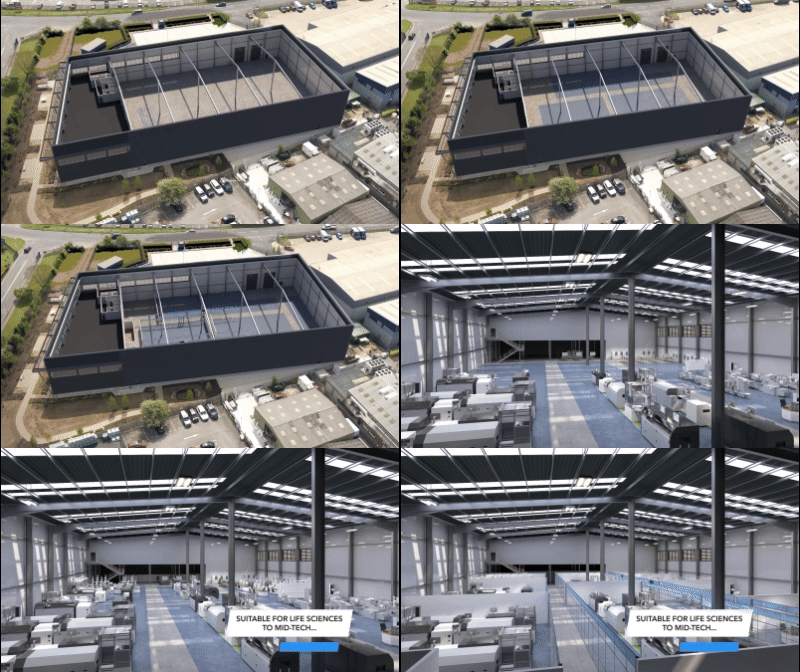
Suitable for Life Sciences to Mid-Tech… Project: Nova Oxford - IM Properties © Blink Image Limited
Why This Expands Your Market (and Speeds Up Decisions)
Visualising multiple tenant types does more than make your marketing look polished.
It actively reduces friction:
• Prospects understand faster
• Agents have clearer narratives to sell
• Enquiries are better qualified
• Conversations move forward with less explanation
Instead of relying on imagination or lengthy verbal descriptions, the visuals do the work - showing adaptability, not just claiming it.

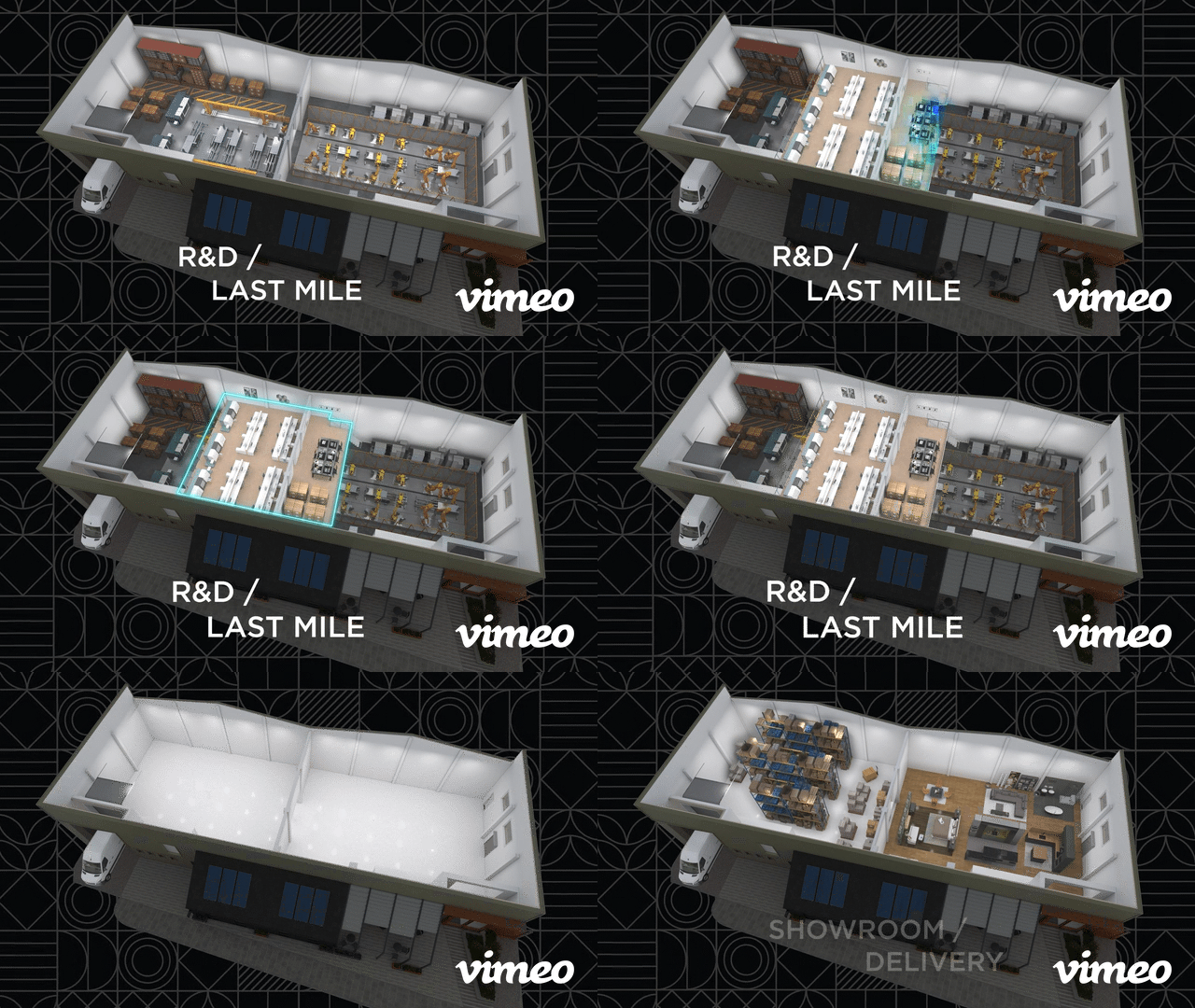
Peel Back Animation to Reveal Interior Racking and Layout © Blink Image Limited
The Bigger Picture
The smartest visual strategies don’t just show what a building is.
They show what it can become - depending on who occupies it.
When occupiers can see their business thriving in a space, confidence follows.
And when confidence is high, decisions tend to come sooner.
If you’re working on a scheme designed to appeal to more than one tenant type, it’s worth asking a simple question:
Are your visuals helping people see themselves there - or leaving too much to chance?
If you want to explore how fit-out visuals could widen the appeal of your next scheme, we’re always happy to talk it through.
✉️ [email protected]
📞 07777 146 495