- Seeing is Selling
- Posts
- Planning Is About Trust. Here’s How Verified Views Build It
Planning Is About Trust. Here’s How Verified Views Build It
Why accuracy, balance, and visual honesty matter more than persuasion when it comes to approvals

Richard Birket
January 30, 2026
Planning decisions are rarely won by persuasion alone.
They’re built on trust.
Trust that what’s being presented is accurate.
Trust that impact has been assessed properly.
Trust that the visuals reflect reality, not optimism.
This is where Verified Views play a critical role.
Not as marketing imagery.
Not as interpretation.
But as a shared, objective reference point that helps everyone see the same thing.

Verified View for The Royal Society of Medicine | © Blink Image Limited
What Planning Committees Are Really Looking For
At its core, planning is about understanding impact.
How tall will this feel from here?
How visible will it be from that footpath?
How will it sit within the existing townscape, landscape, or street scene?
When those questions aren’t answered clearly, uncertainty creeps in.
And uncertainty is what slows decisions, invites objections, and triggers requests for more information.
Verified Views help to remove that uncertainty.
They present a proposed development from precisely defined, agreed viewpoints, aligned with industry standards, surveyed camera positions, and accurate geometry. No exaggeration. No drama. No creative licence.
Just clarity.
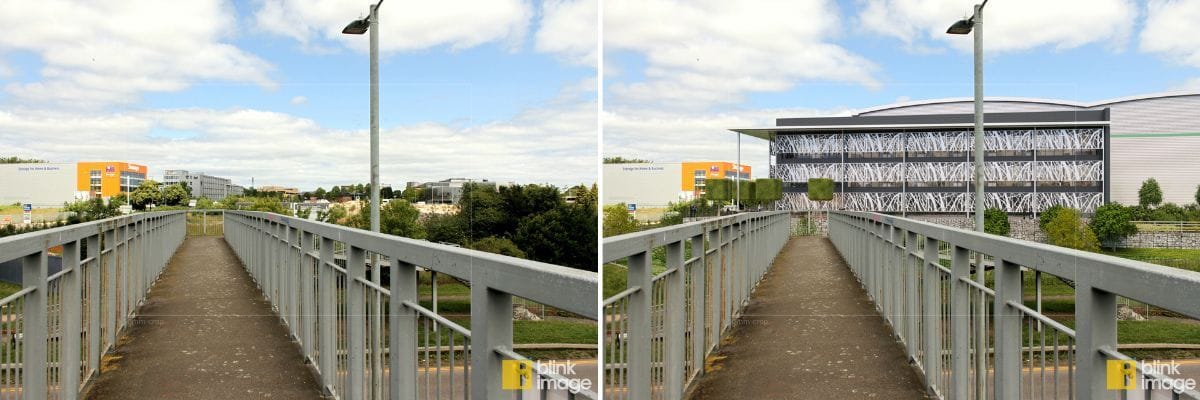
Verified View from a public footbridge for Prologis’s Marylands Gateway | © Blink Image Limited
Accuracy Builds Confidence
Because Verified Views are technically robust, they carry weight.
They give planning officers confidence that what they’re reviewing is a fair representation of what will actually be built. They allow committee members to assess scale, massing, and visual impact without having to imagine or interpret too much for themselves.
That matters.
When visuals feel overly stylised or selective, even unintentionally, they can undermine confidence in the proposal as a whole. People begin to question not just the image, but the intent behind it.
Verified Views do the opposite.
They say:
“This is what it will look like. From here. In context. Accurately.”
Balance Over Persuasion
The most effective planning visuals aren’t trying to sell.
They’re trying to explain.
That balance is important. Verified Views still require artistic judgement: how materials are represented, how light is handled, how the proposal is integrated into its surroundings. Poorly executed views can unintentionally portray a scheme harshly or misleadingly, even if they’re technically correct.
That’s why experience matters.
The goal isn’t just technical accuracy. It’s accurate communication. Showing the scheme honestly, while still reflecting its architectural intent, material quality, and relationship with context.
When that balance is right, objections soften. Conversations become more constructive. Decisions become easier.

A Verified View for the Bourn Quarter Phase 2, showing planting mitigation 10 years apart | © Blink Image Limited
Why This Saves Time (and Cost)
Clear, trustworthy visuals reduce the back-and-forth that often slows applications down.
Fewer misunderstandings.
Fewer requests for clarification.
Fewer surprises late in the process.
They don’t guarantee approval. Nothing does.
But they create a foundation of credibility that planning decisions can be built on.
And in planning, credibility is currency.
The Bottom Line
Planning isn’t about convincing people to like a scheme.
It’s about giving them confidence to understand and approve of it.
Verified Views do that by replacing interpretation with clarity, and persuasion with trust.
If you’re approaching an application where visual impact matters, getting this right early can make all the difference.
If it’s helpful to talk through how Verified Views could support an upcoming submission, we’re always happy to have a conversation.
✉️ [email protected]
📞 07777 146 495