- Seeing is Selling
- Posts
- The Planning Landscape Has Shifted. Has Your Visual Strategy?
The Planning Landscape Has Shifted. Has Your Visual Strategy?
What the move toward officer-led decisions means for the CGIs you commission

Richard Birket
February 27, 2026 • Estimated Reading Time: 1 minute
Planning reform continues to prioritise streamlined decisions and greater use of delegated authority. Much of the debate centres on unit numbers - in the case of housing - and speeding up approvals.
But there’s a quieter implication: the primary audience for your planning visuals is often not who you think it is. If your brief hasn’t evolved, you may be commissioning highly polished imagery for the wrong room.

Railshead Road, Goldcrest Land ©Blink Image Limited
The Room That Makes the Decision
For years, planning CGIs have been shaped — consciously or not — around committee presentations. Councillors are non-specialist and time-pressed. The instinct was to make schemes look as appealing as possible: flattering light, mature planting, active street scenes.
That approach still has a place.
But in practice, most applications are determined under delegated authority by planning officers. Committee is usually reserved for contentious or strategically significant schemes.
Which means the technical gatekeeper is typically an officer — not a committee.
A Different Set of Questions
Officers view CGIs differently. They are asking:
Is this accurate?
Is the context correct?
Does the massing reflect the submitted drawings?
Is the viewpoint verifiable?
In this context, credibility matters more than polish.
An image that subtly softens scale, overstates planting, or presents the scheme more favourably than it will appear on completion can weaken trust. Planning imagery is scrutinised as evidence, not simply presentation.

Kingham Development, Gillespies ©Blink Image Limited
The Visuals That Carry Weight
The visuals that carry weight in officer assessments are those grounded in methodology: verified views aligned with GLVIA3 and local authority guidance, accurate street-level context images, and clear visual impact work.
This does not conflict with marketing imagery. But the order matters.
Planning visuals need to function as evidence first, persuasion second. That distinction is best built into the brief from the outset, not corrected later.
Building It In From Day One
Marketing images still matter — for public consultation, investor audiences and wider communications.
But effective strategies separate planning credibility from marketing storytelling, while keeping them visually coherent.
A technically robust core set supports the officer’s assessment. A complementary set serves broader audiences.
Both are valuable. They simply serve different purposes.
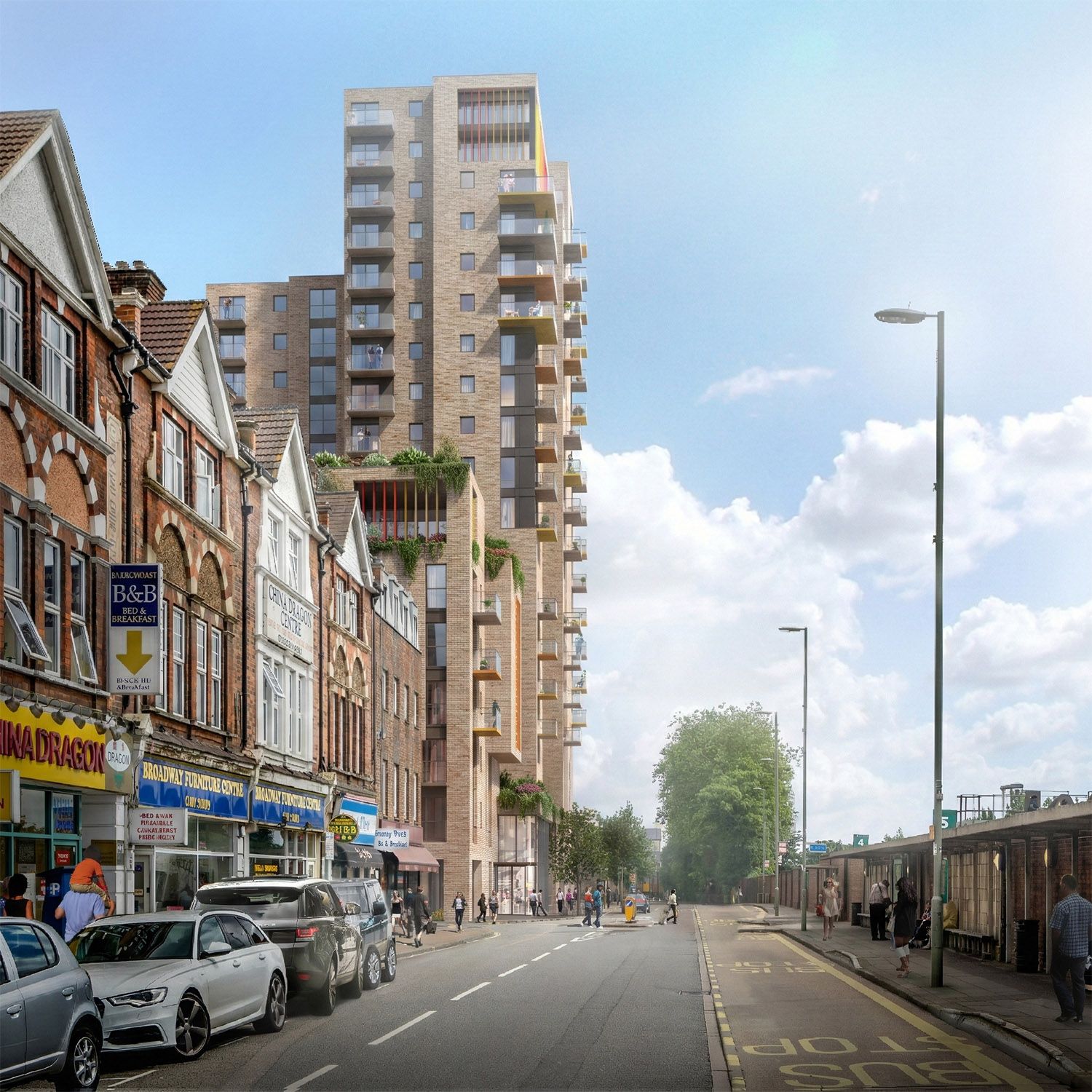
Duke Street Woking, RTKL ©Blink Image Limited
If you’re preparing a planning application this year and haven’t revisited your visual brief in light of current reforms, it’s worth doing.
Being deliberate about who your imagery is really for can make a material difference to how it is received.
We’d be glad to help you think it through.
[email protected] | 07777 146 495