- Seeing is Selling
- Posts
- The Visuals That Kill Objections Before They’re Raised
The Visuals That Kill Objections Before They’re Raised
How the right planning visuals reduce resistance, shorten timelines, and protect your programme

Richard Birket
January 09, 2026
Most planning objections don’t come from people being difficult.
They come from uncertainty.
When communities, consultees, or decision-makers can’t clearly understand what’s being proposed, the default response is concern. Concern turns into objections. Objections turn into delays, redesigns, or appeals.
And often, none of that is necessary.
Because many of those objections could have been avoided before they were ever voiced.
Objections Are Usually About Perception, Not Policy
In our experience, the most common planning objections fall into familiar territory:
• “It feels too big for the area.”
• “It will dominate the landscape.”
• “We don’t understand how this will affect us.”
• “This looks out of character.”
These are rarely technical planning failures. They’re perception gaps.
Written reports and drawings do important work, but they rely on interpretation. And interpretation is where doubt creeps in.
The right visuals remove that ambiguity.
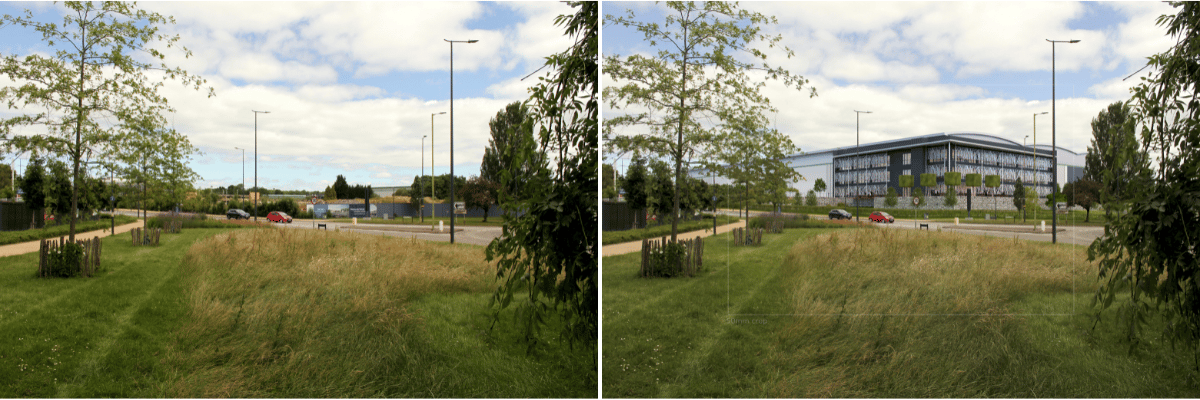
Verified View for Prologis’s Marylands Gateway | © Blink Image Limited
Showing Reality Beats Defending Assumptions
Planning visuals are most powerful when they don’t try to persuade. They simply show.
Accurate, carefully considered imagery allows stakeholders to see:
• how a scheme actually sits in its surroundings
• what will and won’t be visible from sensitive viewpoints
• how scale, massing, and landscape are experienced at human level
• how mitigation works in practice, not just on paper
When people can see the reality for themselves, many objections lose their footing.
That’s especially true when visuals are built around clarity and reassurance, rather than exaggeration.
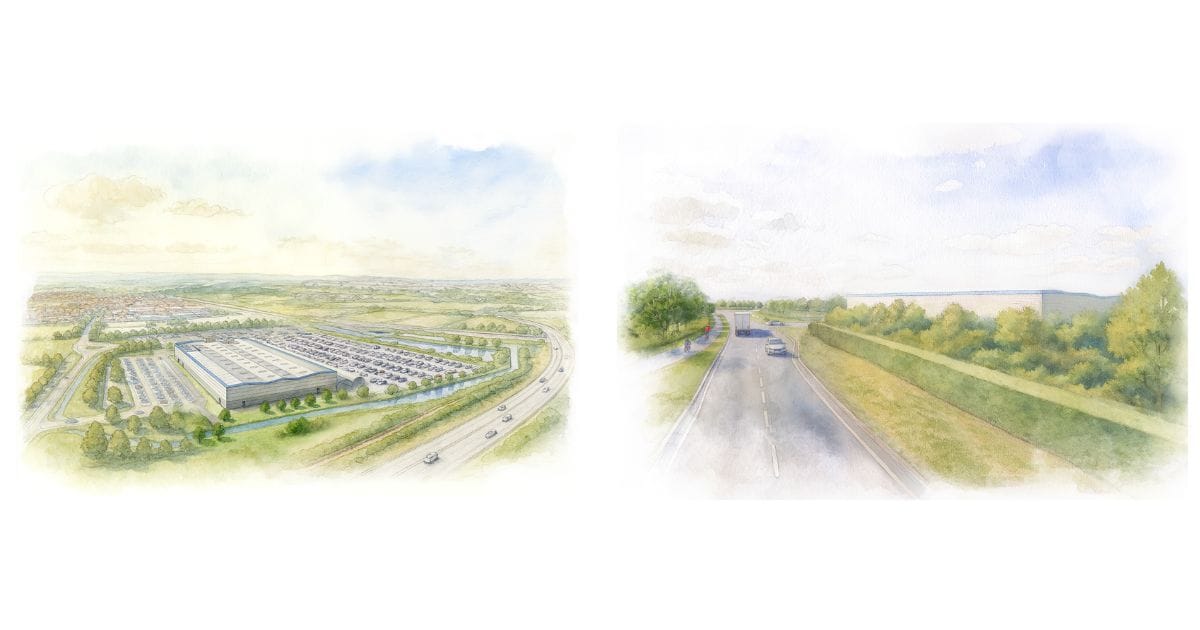
Artistic Illustrations for an industrial development | © Blink Image Limited
Different Tools, Different Jobs
Not all planning visuals do the same thing.
Verified views provide technical confidence. They ground the discussion in fact, not opinion, and give committees something they can trust.
Artistic illustrations soften early conversations. They help introduce ideas without locking down detail too early, which is often critical during public consultation.
Mitigation views quietly do their work by demonstrating how little impact a scheme may actually have from key locations.
Planning films help explain complexity. Flood mitigation strategies, highways improvements, phasing, biodiversity, access routes. Things that are hard to grasp in isolation become much easier to understand when shown as a joined-up story.
Used together, these tools don’t argue the case. They make it obvious.

Snippet from a film showing industrial park amenities and landscaping | © Blink Image Limited
Why This Saves Time and Money
When objections are addressed visually from the outset, several things happen:
• consultations become calmer and more constructive
• committees have fewer unknowns to wrestle with
• redesign requests reduce
• planning timelines stabilise
Most importantly, you avoid the expensive loop of reacting to concerns that could have been anticipated.
That’s where planning visuals deliver real value. Not by “selling” a scheme, but by creating understanding early enough to keep things moving.

Mitigation View showing how an industrial development won’t be seen from a public foot path | © Blink Image Limited
The Bottom Line
Good planning visuals don’t win arguments.
They remove the need for them.
By showing reality clearly, calmly, and accurately, you reduce resistance before it has a chance to form. And that can make the difference between a smooth journey through planning and a long, costly detour.
If you’re thinking about how best to present a scheme at planning stage, we’re always happy to talk through what visuals will support you the most. Book in a call and let’s chat.
✉️ [email protected]
📞 07777 146 495