- Seeing is Selling
- Posts
- Where Great CGIs Actually Start
Where Great CGIs Actually Start
8 viewpoint principles that give your CGIs a stronger foundation

Richard Birket
February 20, 2026
A great CGI doesn’t begin with 3D modelling - it starts with a great view.
Choosing the right camera position, lens, horizon line, and composition can make the difference between a visual that feels flat and one that draws people in. Yet it’s one of the most overlooked steps in the visualisation process.
Good viewpoint selection sets the foundation for storytelling, realism, and emotional connection. Get it right alongside your rendering process, and your visuals do the heavy lifting for you - helping stakeholders see your vision clearly and convincingly.
Here are 8 key principles we always consider when planning any shoot or virtual camera setup:
1. Test Views First
A quick block model, or even a check on Google Earth or Street View, can save hours on site. Testing views early helps confirm which angles tell the best story - before you even pick up a camera or drone. We always host an interactive viewpoint call with our clients, or send them a variety of suggested viewpoint studies to ensure everyone is on the same page.

An interactive viewpoint session with one of our clients | © Blink Image Limited
2. Always Keep the Horizon in View
Including a touch of sky in drone photography gives scale and balance. It helps the eye read distance naturally - something that’s crucial when visualising large industrial or infrastructure schemes.
3. Make the Horizon Work for You
Before locking in a drone shot, look beyond the site boundary. Is there something interesting on the horizon - a town, a landmark, or a stretch of countryside? Or maybe there is something that you DON’T want to see! Considering the horizon thoughtfully can anchor your scheme in its context and make the composition more engaging.

Western Road for Goya Developments - Positioning shot with London on the horizon | © Blink Image Limited
4. Match the Field of View
Different drones and camera lenses capture very different perspectives. Matching the field of view (FOV) correctly ensures the proportions and scale feel natural once the CGI is composited. This can be a challenging step, but so crucial to the success of an image. It’s one of those invisible details that quietly adds credibility.
5. Think About the Sun
The time of day can completely change the mood. Early morning or late afternoon light often creates a softer, more atmospheric image. Harsh midday light, while bright, can flatten contrast. The key is to plan orientation and timing - to use the sun, not fight it.
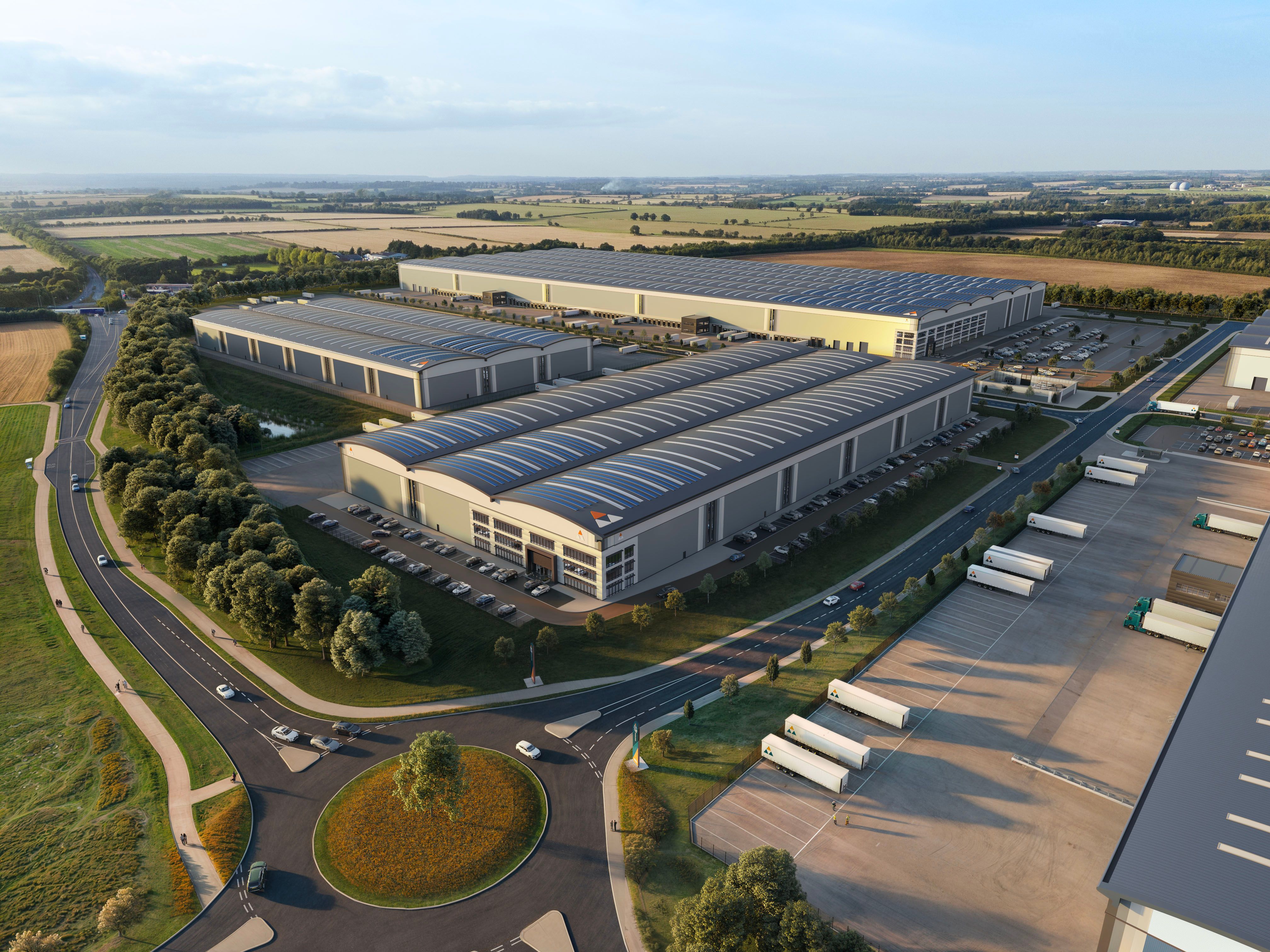
Symmetry Park Ardley for Tritax Big Box - Shot in dramatic evening sun | © Blink Image Limited
6. Capture 3x3 Panoramas
Rather than relying on a single shot, we capture overlapping 3x3 panoramas. It gives more flexibility when framing later and ensures no crucial detail is cropped out. A small step that can make a big difference when building complex CGIs.

Flexibility after the shoot with a 3×3 panorama | © Blink Image Limited
7. Keep Lenses Natural at Eye Level
It’s tempting to go wide to ‘get it all in’, but that can distort reality. A 24mm equivalent is usually the sweet spot - dynamic enough to feel immersive, but not so wide that it stretches the view unnaturally.
8. Plan Everything in Advance
Turning up and firing off hundreds of shots rarely delivers results. Planning the right views beforehand - guided by narrative, lighting, and intent - ensures every image captured has a clear purpose.
The Bottom Line
Strong visuals start with strong foundations.
The right viewpoints don’t just make CGIs look good - they make them feel right. They help tell your story truthfully, beautifully, and with intent.
At Blink Image, we treat viewpoint selection as one of the most important stages of any visual strategy. Because when you start with the right view, the rest of the story is easier to tell.
Need help telling (and selling) the story of your next scheme? Get in touch - we’re here to help!
✉️ [email protected]
📞 07777 146495